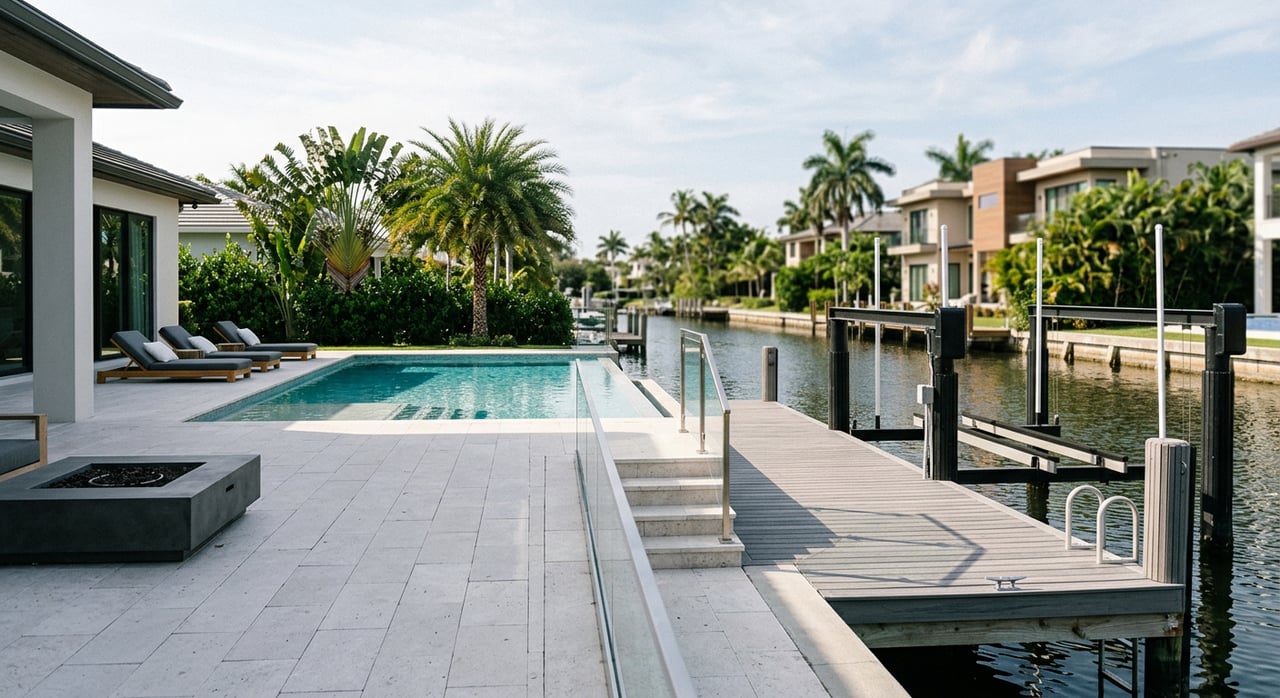
What to Know About Lighthouse Point Boat Friendly Homes
March 24, 2026
March 24, 2026
If your ideal morning starts with coffee on the dock and a quick run to the ocean, Lighthouse Point deserves a close look. This small, canal-rich city gives you direct access to the Intracoastal and fast runs to the Atlantic through Hillsboro Inlet. Buying the right home for your boat takes more than a pretty seawall, though. In this guide, you’ll learn the essentials: canal access, bridge clearances, dock and seawall rules, permits, and the exact checklists to use before you write an offer. Let’s dive in.
Lighthouse Point was built for life on the water. Most homes sit on residential canals that connect to the Intracoastal, and the inlet is minutes away by water. You also have nearby full-service dockage at Lighthouse Point Marina, a helpful backup if you need transient slips or services while you plan upgrades or repairs. You can confirm location and services by checking the operator’s page for Lighthouse Point Marina.
Hillsboro Inlet is powerful and dynamic. Channel depths can shift after storms, and currents run strong. Before you assume a specific draft will clear, check the U.S. Coast Pilot for inlet guidance and talk to a local dockmaster for current depth notes. A recent sounding at mean low water is your best proof of usable depth.
Canal-front and Intracoastal-front parcels follow different city rules. The city’s docking table ties allowable dock width and extension to the waterway’s width. For example, Intracoastal frontage may allow up to a 46-foot extension under the ordinance. Always match a listing’s claims to the city’s numeric standards and permit history.
Your route to the ocean may include fixed bridges or drawbridges. Confirm three things: the exact bridge or bridges on your path, the vertical clearance at mean low water, and any drawbridge opening schedule that could add wait time. Federal drawbridge regulations list the Broward County schedules and operating rules.
Narrow canals affect how you berth and turn. Lighthouse Point uses canal width, including a 100-foot breakpoint, to cap dock size and extensions. The city also limits rafting multiple vessels at one seawall, with limited temporary exceptions. Verify your intended mooring plan against the ordinance before you buy.
Lighthouse Point sets clear limits on dock dimensions, heights, setbacks, and mooring positions. Key examples include: docks not higher than the seawall cap, specific side setbacks and piling rules, and restrictions on mounting lifts or davits on top of the seawall cap. Ask the seller for closed permits and as-built drawings so you can confirm compliance.
Broward County’s regional standard requires new or substantially repaired tidal flood barriers to meet minimum elevations, generally 5.0 feet NAVD88, with an interim allowance in some cases. Sellers must disclose tidally influenced conditions and potential seawall obligations. Request an Elevation Certificate or recent survey that shows the top-of-seawall elevation in NAVD88 and check for any county or city orders that could require raising it.
If a dock, lift, or dredge work extends over state sovereign submerged lands, you may need Florida Department of Environmental Protection authorization. Work in navigable waters often needs U.S. Army Corps of Engineers review or verification under regional permits. Expect conditions that protect resources like seagrass, and build time for approvals into your plan.
Use these on-site checks to confirm a home is truly boat friendly.
Before you budget or negotiate, request written scopes and timelines. Good starter prompts:
Boat and dock coverage varies widely. Ask about named-storm deductibles, agreed value vs actual cash value, liability for wreck removal, and any required hurricane plan. Many Florida policies offer haul-out reimbursement or reduced deductibles if you secure or remove the boat ahead of a storm. Get specifics in writing from your carrier.
Use these authoritative sources to verify details and plan your upgrades:
Finding the right canal, confirming clearance to the ocean, and matching your boat to the lot and city rules is where your Lighthouse Point purchase succeeds. If you want a valuation-led search that factors in access, upgrade costs, and resale, our team is ready to help you move with confidence. Reach out to The JM Phillips Group to start a focused, boat-smart home search.
Stay up to date on the latest real estate trends.
Whether you're buying or selling, our expert team is here to guide you every step of the way.