A Palm Beach Neighborhoods Guide From North to South
July 23, 2026
July 23, 2026
If you are trying to make sense of Palm Beach, the biggest surprise is this: the island is less about broad “good” or “bad” areas and more about micro-location. In a fully developed town with strict zoning, the real differences from north to south usually come down to privacy, housing type, walkability, and beach access. If you are buying, selling, or relocating, understanding those tradeoffs can save you time and help you focus on the right fit. Let’s dive in.
Palm Beach is often discussed in three practical residential buckets: the North End, the Worth Avenue or in-town core, and the South End. These are the labels that most clearly explain how the island functions from a real estate point of view.
That said, subarea names can vary depending on the listing portal or market report. You may also see terms like Mid-Town, South End Condominiums, or South of Sloan’s Curve. The most useful way to read those labels is as guideposts rather than exact legal boundary lines.
Palm Beach is also a mature market. The Town describes it as fully developed, with active historic preservation and strict zoning, and the current housing snapshot shows a median listing price of $2.9925 million, 357 homes for sale, and a 105-day median time on market. That context matters because inventory, pricing, and lifestyle can shift meaningfully from one section of the island to another.
The North End is generally understood as the part of Palm Beach north of the Royal Poinciana Bridge. If you picture estate-scale Palm Beach, this is often the section people mean.
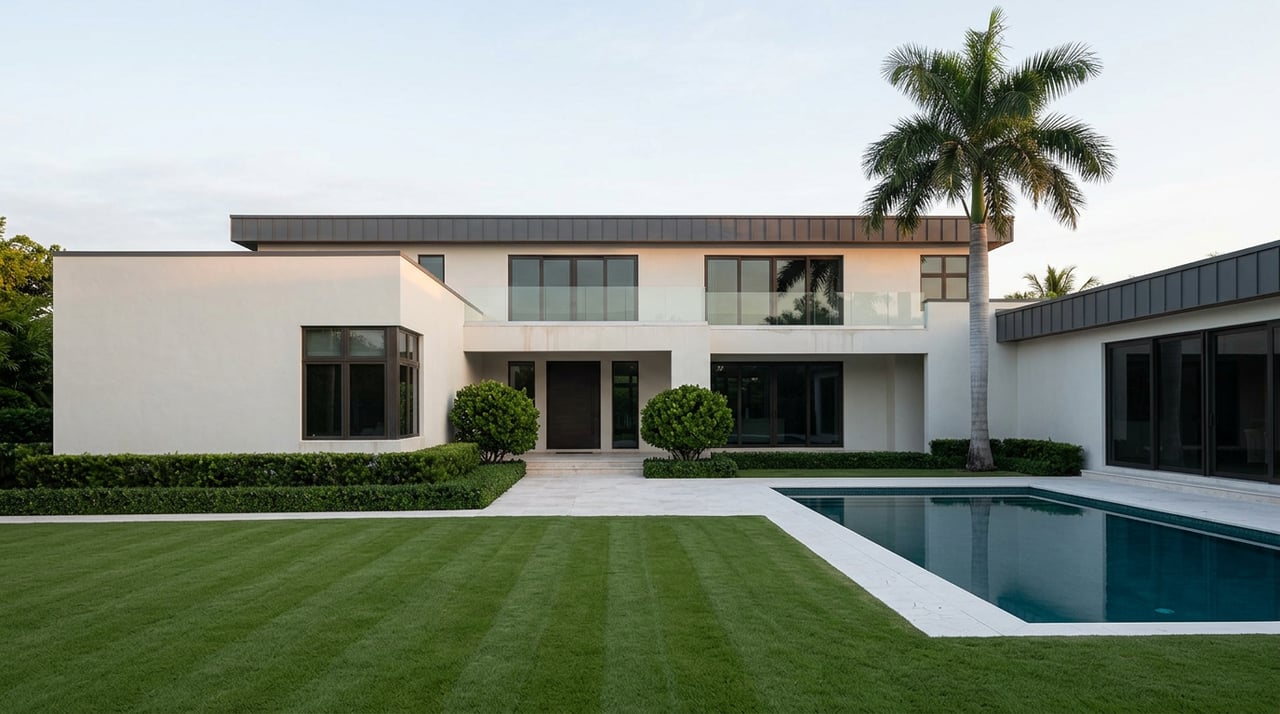
The housing story here is clear. Q2 2026 data shows a median sales price of $10.4 million, and a Q1 2026 report showed that every closed sale was above $5 million. In simple terms, the North End is heavily defined by luxury single-family homes, larger lots, and trophy-level pricing.
Compared with the center of town, the North End feels more residential and less retail-focused. The main concentration of shops and restaurants sits farther south, so daily life here is typically more about privacy and residential scale than being a short walk from storefronts.
That does not mean you lose outdoor access. The nearly six-mile Lake Trail runs from the Royal Park Bridge to the North End, which gives this area strong walking and biking appeal. For many buyers, that balance of quiet residential surroundings and scenic access is a big part of the draw.
If you want a quick pricing shorthand, think low double-digit millions. The current median sales price of $10.4 million supports that, and the fact that all Q1 2026 closings were above $5 million reinforces how consistently high-end this section is.
For buyers, that usually means the North End works best when your priorities include lot size, privacy, and estate character. For sellers, it means pricing strategy has to reflect a highly specific luxury buyer pool rather than a broad market audience.
The Worth Avenue and in-town area is the island’s commercial and pedestrian center. Around Town Hall, Worth Avenue, South County Road, Peruvian Avenue, and nearby blocks create the most walkable part of Palm Beach.
Housing here is more mixed than many buyers expect. The Worth Avenue neighborhood page shows a median listing home price of $2.863 million, with only three active homes and a 121-day median time on market. But nearby central Palm Beach data also shows Mid-Town at a $3.8 million median sales price, with several condo and co-op communities in the roughly $5 million to $6.8 million range.
If your goal is centrality, this is the part of Palm Beach that delivers it most clearly. The Town identifies many restaurants and shops along Worth Avenue, Royal Poinciana Way, The Royal Poinciana Plaza, and surrounding streets.
This section also has a more destination-oriented feel. The Town identifies Worth Avenue Clock Tower and Midtown Public Beach as public event venues, and timed parking patterns in the area reflect a true pedestrian core. In practical terms, this is where you look if being close to shopping, dining, and public beach access matters as much as the home itself.
A simple shorthand for the in-town market is upper-entry luxury to very high-end attached living. The low end of the visible range starts around the high $2 millions, while many nearby condo and co-op options sit in the $5 million to $6.8 million range.
Because this area includes several building types and block-by-block differences, pricing is less uniform than the North End. Two properties in central Palm Beach can feel very different in value depending on the building, exact street, and proximity to the core retail and beach areas.
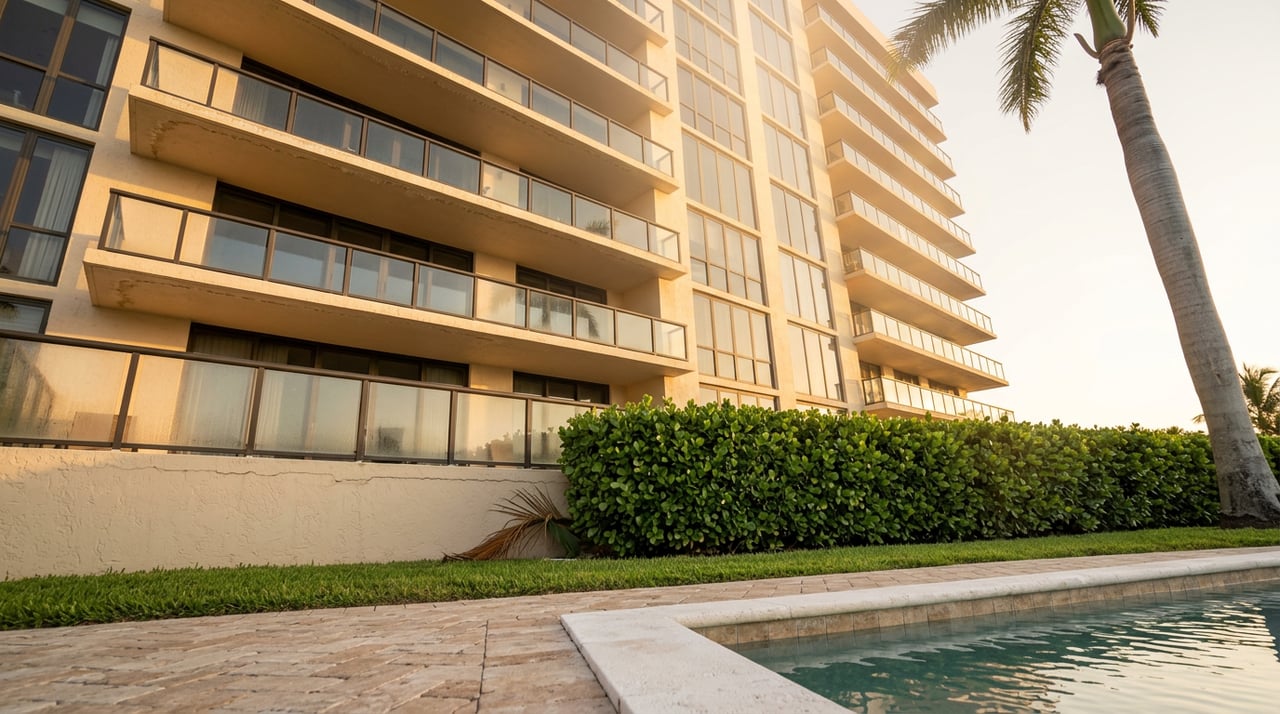
The South End is the most condo-heavy of the three broad areas, and it is also the most price-diverse. In current market reporting, South End Condominiums show a Q2 2026 median sales price of $1.56 million, while South of Sloan’s Curve shows a median sales price of $1.25 million.
Those numbers tell an important story. The South End is still very much Palm Beach, but it tends to offer a more accessible price point than the North End and a more attached-housing-oriented profile overall.
If you want Palm Beach to feel beach-first, the South End stands out. The Town notes that Palm Beach has 12 miles of beachfront and identifies Midtown Municipal Beach and Phipps Ocean Park as the two public beaches.
The Town also identifies beach access from Barton Avenue to Seaspray Avenue and from Sunset Avenue north to Wells Road. Lifeguards are provided at the two public beaches, while some other access stretches are not lifeguarded. For buyers who prioritize shoreline proximity and a quieter residential rhythm, this part of town often checks the right boxes.
The clearest shorthand for the South End is low- to mid-seven figures, with many closings in the $1 million to $3 million band. The detailed South End condominium data also shows a meaningful share of closings under $1 million and none above $5 million.
That makes the South End the broadest price band in this comparison. For buyers, it can open the door to Palm Beach ownership at a lower entry point than the island’s estate-driven areas. For sellers, it means buyers are often comparing your property closely against other condo options and beach-access advantages.
If you are deciding between sections of Palm Beach, the easiest way to compare them is by lifestyle priority.
None of these areas is “better” in a universal sense. The right fit depends on whether you want a quieter residential setting, a walkable core, or a more beach-centered daily experience.
If you are buying in Palm Beach, it helps to narrow your search around a few practical questions:
Answering those questions early can keep you from comparing homes that serve very different lifestyles. On an island where micro-location matters this much, clarity upfront is a major advantage.
If you are selling, neighborhood positioning matters just as much as square footage and finishes. A North End property is not marketed the same way as an in-town condo, and a South End residence competes on a different set of strengths than a larger estate farther north.
That is where valuation discipline becomes especially important. In Palm Beach, buyers often pay for a combination of location, access, housing type, and lifestyle fit. The strongest pricing strategy accounts for those local differences rather than relying on broad island-wide averages.
Palm Beach is not a market where one label tells the whole story. It is a fully developed town, and that tends to make small geographic differences matter more, not less.
That is why the best high-level summary is this: the North End trades on privacy and estate scale, the in-town core trades on walkability and centrality, and the South End trades on beach access and a wider condo price band. Once you understand that framework, the island becomes much easier to read.
If you are weighing a move, preparing to sell, or trying to compare Palm Beach options with nearby coastal communities, working with local, valuation-driven guidance can make the process much more efficient. For tailored help with Palm Beach buying, selling, relocation, or coastal property strategy, connect with The JM Phillips Group.
Stay up to date on the latest real estate trends.
Whether you're buying or selling, our expert team is here to guide you every step of the way.