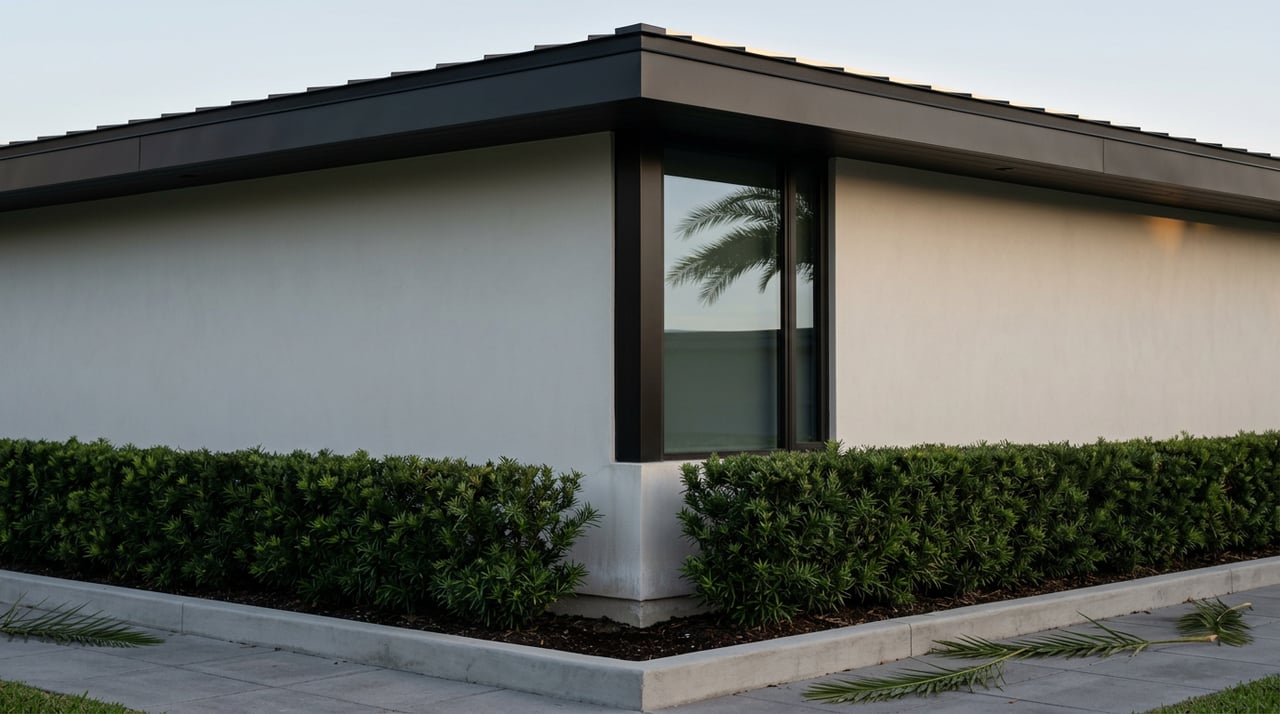
Manalapan's Two Biggest Stories Right Now Are Both About Access
September 3, 2026
September 3, 2026
The loudest thing in Manalapan most days is not construction, not traffic, not even the ocean. It's a sand pump. The Boynton Inlet transfer plant has been running along the town's southern edge for nearly 90 years, quietly moving sand from Manalapan's side of the inlet to Ocean Ridge's side to keep the channel clear for boats. Nobody in town had a reason to challenge it before. This year, Manalapan did.
The second story is smaller in scale but tells the same kind of story. When Nobu quietly debuted inside Eau Palm Beach Resort & Spa, it wasn't taking outside reservations at all. If you weren't staying at the hotel, you weren't getting a table, full stop.
Two very different subjects. Same underlying question, in a town where the 2020 census counted 419 residents and this year's estimate puts the number around 451, spread across 2.4 square miles of which more than 80 percent is water: who gets access to what's here, and on whose terms.
The sand transfer plant itself is not new. What changed is the permit behind it. In 2025, the state approved a new 10-year permit letting Palm Beach County pump more sand south, from Manalapan's side of the Boynton Inlet to Ocean Ridge's. Manalapan's legal complaint argues the town was never properly consulted before that permit was issued, and that the added volume accelerates erosion the town says it's already been managing for years.
John Fumero, the attorney representing Manalapan in the case, put the stakes plainly in the filing: increased erosion would diminish the size and quality of the town's beaches, injure the environment, reduce turtle habitat, and weaken the natural buffer those beaches provide for the homes behind them.
A five-day administrative hearing was set to begin Aug. 24. It didn't happen. In early August, Ocean Ridge asked to intervene, joining Palm Beach County and the Florida Department of Environmental Protection in opposing Manalapan's challenge. Administrative Law Judge Francine Ffolkes postponed the hearing to give the town time to prepare against a bigger fight than it started.
Ocean Ridge's mayor, Geoff Pugh, did not hold back once his town joined in:
"It literally makes no sense. Any town whose residents use that inlet for navigation should be up in arms about it."
He named Boynton Beach, Lantana and Hypoluxo as towns likely to follow Ocean Ridge into the case. What makes the dispute stranger is how it surfaced: Ocean Ridge reportedly didn't know Manalapan had filed the complaint until a reporter from The Coastal Star called to ask about it. Two towns sharing one inlet, and one found out its neighbor was suing over the sand between them from the local paper.
The mention of turtle habitat in Manalapan's complaint isn't a throwaway line. It connects the legal fight to a set of rules residents already live with every year. Palm Beach County's Sea Turtle Protection and Sand Preservation Ordinance names Manalapan directly among the municipalities where beachfront lighting is restricted, alongside Lantana, Lake Worth and Boynton Beach, from March 1 through October 31.
For property owners along that stretch, the practical version of the ordinance looks like this every nesting season:
None of that is new this year. What's new is that the town is now arguing, in a legal filing, that a state-approved increase in sand removal threatens the very beach those rules already exist to protect. The erosion argument and the turtle argument are the same argument, made in two different rooms.
The other Manalapan story this year runs in the opposite direction, from closed to open. Nobu Manalapan, chef Nobu Matsuhisa's 23rd U.S. restaurant, debuted quietly inside Eau Palm Beach Resort & Spa in mid-October 2024, taking over the space that had housed Bokēn and Stir Bar & Terrace. It opened only to guests staying at the resort. A resort spokeswoman told The Coastal Star at the time that outside reservations weren't being taken yet, even as public interest built, and that the restaurant would open more broadly "soon."
That soon has arrived. Nobu Manalapan is now a permanent, fully public restaurant, folded into a broader renovation of the resort's dining spaces. Executive chef Matt Raso runs the kitchen day to day, working alongside Eau Palm Beach's own executive chef Neall Bailey. The menu keeps the dishes the brand is known for: black cod cured in miso, yellowtail with jalapeño, wagyu tacos, and a sushi program built around premium sake. Current hours run 5:30 to 9:30 p.m. Sunday through Thursday and 5:30 to 10:30 p.m. Friday and Saturday, and reservations can only be booked up to 30 days out, so there's no locking in a table for a birthday six months from now. You plan a month at a time or you don't plan at all.
It's worth saying plainly what this means locally: Manalapan doesn't have a downtown or a strip of independent restaurants. Its public dining rooms live almost entirely inside its resorts, chiefly Eau Palm Beach, where Nobu now sits alongside Angle for steaks and local seafood, Breeze Ocean Kitchen, and the lighter, cocktail-forward Stir. For a town this small, whether or not outsiders can get a seat at one of those rooms is close to the whole conversation about what "going out" even means here.
Manalapan's baseline instinct has always leaned toward privacy. Larry Ellison bought a 22-acre estate here in 2022 for $173 million, the most expensive home sale in Florida's history, on a property connected by tunnels running under A1A so he never has to cross the road at street level. Sean Hannity bought a two-acre, 12,000-square-foot residence on the barrier island in 2024 for $23.5 million. This is a town that has spent decades optimizing for exactly who gets to see, use, or reach its shoreline.
What's notable about this particular year is that both of its biggest local stories run against that instinct in different directions at once. The sand fight is Manalapan trying to hold a boundary it feels is being eroded, literally, by a county permit it says it never got to weigh in on. The Nobu story is the opposite: a door that opened to hotel guests only has since swung open to the town around it. Same question, both directions, same twelve months.
If you live in Manalapan, neither story changes your address. But they're both worth watching, because they tell you something about how a town this small negotiates the line between what it keeps to itself and what it shares, right now, in real time.
If you're weighing a move to Manalapan or anywhere else along this stretch of coast and want a read on how stories like these connect to value and timing, The JM Phillips Group tracks these shifts neighborhood by neighborhood across coastal Palm Beach and northern Broward. Reach out anytime to talk through what's actually happening on the ground here.
Stay up to date on the latest real estate trends.
Whether you're buying or selling, our expert team is here to guide you every step of the way.